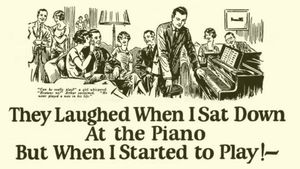


Just circling back, as I'm not sure you saw my last message. I'm reaching out so we can jump on a call to run the numbers...
Infuriating, isn't it?
Recently, every unwanted salesperson, startup founder and "growth hacker" seems to be writing from the same dreadful script.
The floodgates reopened after GDPR stopped scaring spammers. Now, thanks to AI, their deluge of slop lands with even less soul.
The language is so painfully fake that it feels like performance art.
One junked email, dripping with fake bonhomie, ends: “P.S. I’m working on my rejection-coping skills…”
No, you're not, pal. You're sending the same email to 8,000 people before lunch. And it's got to stop.
The strange magic of email
This is all such a shame, because email remains one of the most powerful communication tools ever invented.
The first email was sent in 1971 by engineer Ray Tomlinson, years before the modern internet existed.
He also gave us the @ symbol, presumably never imagining it would one day appear in messages offering to “supercharge his pipeline”.
Tomlinson lacked a sense of occasion. The first message was reportedly something like:
QWERTYUIOP
Judging by the average spam of today, not much has changed. And yet, email survives.

Every few years, somebody declares email is dead. Usually on LinkedIn, but just as often in an email newsletter.
However, the channel refuses to die. While social media is about performance, and websites are about search intent, email taps into something far more intimate.
It arrives in the same place as messages from your closest friends, your bank, and your child’s school. That’s an extraordinary privilege for communicators.
Treat it carelessly, and readers will junk you instantly with a swipe of their thumb. But, use email properly, and you have a direct line to their attention.
Why us oldies keep checking our inboxes like lab rats
The reason email remains absurdly addictive, despite the mountain of rubbish, is that every once in a while, something wonderful appears:
- good news
- a message from somebody we care about
- a new client
- money
Behavioural psychologists call this “variable reinforcement”. It’s the same mechanism behind gambling and fishing.
A slot machine that pays out every time would be profitable, but boring. What keeps people hooked is uncertainty. It's the next spin that matters.
Possible dopamine hits from email? Well...yes.
Email works in the same way.
Most inbox visits are pointless. But, now and then, we get a reward powerful enough to keep us checking compulsively.
Which is why bad email matters more than people think.
Every lazy “just checking in” message chips away at a channel that still works brilliantly when treated with care.
Why do Gen Z struggle with email?
How easy is it to find a needle in a haystack?
Imagine you were born in the early 2000s, and to access anything from the very first time you go online, you have to give your name and email address.
To buy anything, you have to give your email address.
To sign up for anything, your email address.
It doesn't take a genius to second-guess what your inbox looks like now. Without time-consuming pruning, virtually every email you receive is promotional junk.
So it's no surprise that Gen Zs miss important emails from institutions, family and friends. Nor that adapting to an email culture in the workplace can be hard.
Yes, commercial email providers like Gmail and Apple are getting pretty good at helping people structure their inboxes to suit their own needs.
And Email readers like Superhuman and even (shhhh) Co-Pilot are embedding a sorting-hat mentality from the outset.
But they're not, and never will be as good as the recipient wants. Or needs.
The real problem: synthetic intimacy
The problem with modern email isn’t automation. It’s pretending that automation is friendship.
Even ignoring all the shops sending us promotions, it's the person-to-person emails that fail the most. Imagine walking into a pub and announcing: “Just circling back on our previous conversation.”
Or telling the barman: “I’m reaching out to see whether funding is still on your radar.”
People would think you're bonkers.
These phrases create the illusion of professionalism while saying absolutely nothing. They’re meaningless word putty.
In real life, nobody (at least, nobody in the UK) “reaches out,” they might “get in touch” or “email”.
And nobody “jumps on a call to break it down,” they “explain something”.
The more corporate the wording becomes, the more accountability disappears.
Making something sound 'businesslike' by copying the tone and style of US-based sales pitches fails at one of the central principles of any communications strategy.
And it fails particularly badly when pitching a story to a journalist.
The most basic principle of communications is: Know your audience.
What spammers say: “I’ve sent a handful of emails now, assuming this isn’t a priority…”
What they mean: “You ignored me five times, and I’m trying to guilt-trip you into replying.”
What spammers say: “You’re a great fit.”
What they mean: "I scraped LinkedIn, and you have the word 'communications' in your job title.
Email works best when it feels personal, honest and direct. Treat it like one-to-one communication.
The smoothed-out language of AI is the verbal equivalent of beige office carpet: bland, forgettable, and obviously fake.
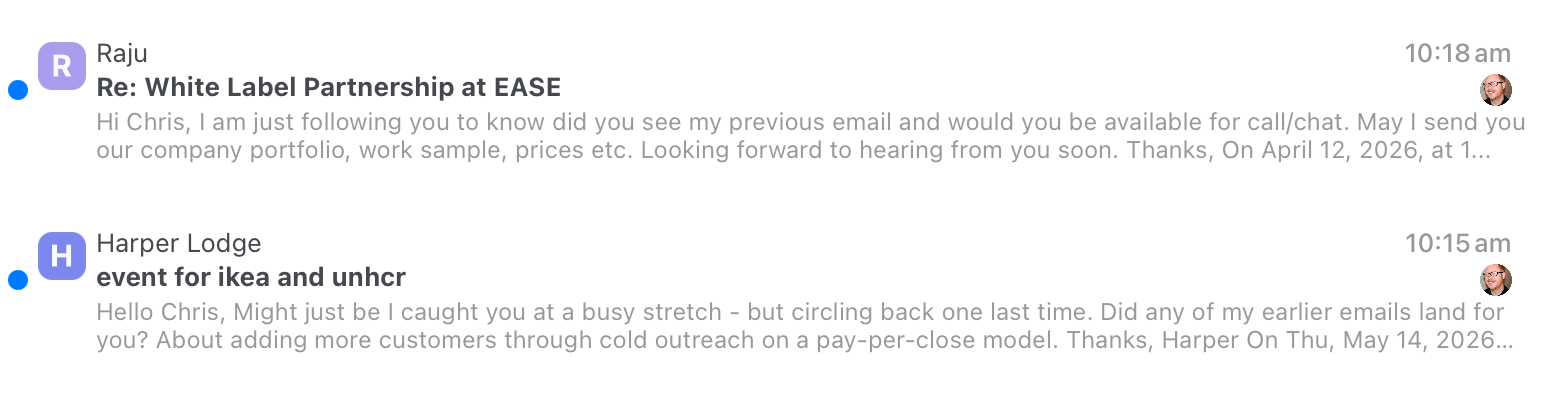
In the AI era, sounding rough around the edges might actually become a trust signal. And some of the best-performing emails look disappointingly simple.
Avoid giant header images, screaming CTA buttons and stock photography of gurning colleagues pointing at laptops.

It's far better to use plain English, a tone that matches the way that you speak, and a clear subject line.
Most importantly, ensure that your email contains one worthwhile idea. Something that your reader will find helpful or rewarding.
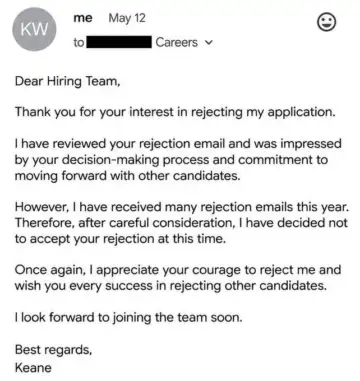
This 'rejection of a rejection' email went viral last week, for good reason. It was very well-written and described a familiar situation. (Another area which is filling up rapidly with AI-slop as it happens).
The inbox is earned, not owned
The most successful email campaigns that we run begin with people, not software.
Receiving an email is one of the few business communications channels that is time-dependent and not defined by an algorithm.
You see emails in the order in which they were sent. (Even when sifting by Primary/Promotion/Social/Updates).
Something new and unread sits at the top of your work inbox simply because it is new. And therefore relatively important.
By building on that novelty and throwing in some 'variable reinforcement' mechanics, email remains one of the most valuable and effective ways to reach people.
We're big fans.
When it's done well.
The most effective email campaigns ask and then answer these questions:
- What does your audience actually care about?
- What problem are you solving?
- What would make this email worth opening?
- What's in it for me, as the recipient?
We help organisations to sharpen their tone of voice, stop sounding corporate, and send newsletters people actually want to open.
That could mean sophisticated automation and segmentation, or it could simply be removing jargon and replacing it with plain English. Or multivariate testing of titles, images, and calls to action.
So, if your current strategy involves “touching base”, “circling back,” or “jumping on a quick call to unpack synergies”, we need to talk.